Chapter 2: The Revolving Door — IDRBT's Governance Structure
2.1 The Governing Council: Structural Inbreeding
IDRBT's Governing Council is chaired by former RBI Deputy Governor N.S. Vishwanathan and includes:
- N.S. Vishwanathan (Chair) — former RBI Deputy Governor
- Deepak Kumar (Member) — IDRBT Director, fellow board member of IFTAS, ReBIT, RBIH, NPCI [3]
- Senior RBI officials (current)
- Representatives from NPCI
- Academics [5]
The structural conflict: Every voting member has spent their career within the RBI ecosystem. There is no one at the table with an independent interest in questioning no-tender awards, procurement byelaw changes, or security audit failures — because questioning would mean questioning former colleagues, future bosses, or one's own prior decisions.
2.2 The 3-Month Placeholder: Evidence of Predetermination
| Director | Tenure | Duration | Gap |
|---|---|---|---|
| Smt. K. Nikhila | 24 Jan 2024 – 1 May 2024 | ~3 months | — |
| Deepak Kumar | 2 May 2024 – present | Ongoing | 1 day |
Smt. K. Nikhila served as IDRBT Director for approximately 92 days — statistically anomalous for any institution with a genuine leadership transition. [6] The simplest explanation:
1. The Governing Council knew Deepak Kumar's RBI Executive Director term was ending
2. A placeholder was needed while formalities completed (cooling-off? appointment process?)
3. Nikhila was moved in and out with no real mandate to lead the institution
4. Deepak Kumar assumed charge the very next day after Nikhila's last day
The 1-day gap between their tenures proves the appointment was pre-determined. The Governing Council did not conduct a search — it waited for Deepak Kumar to become available.
2.3 The Revolving Door Network Map
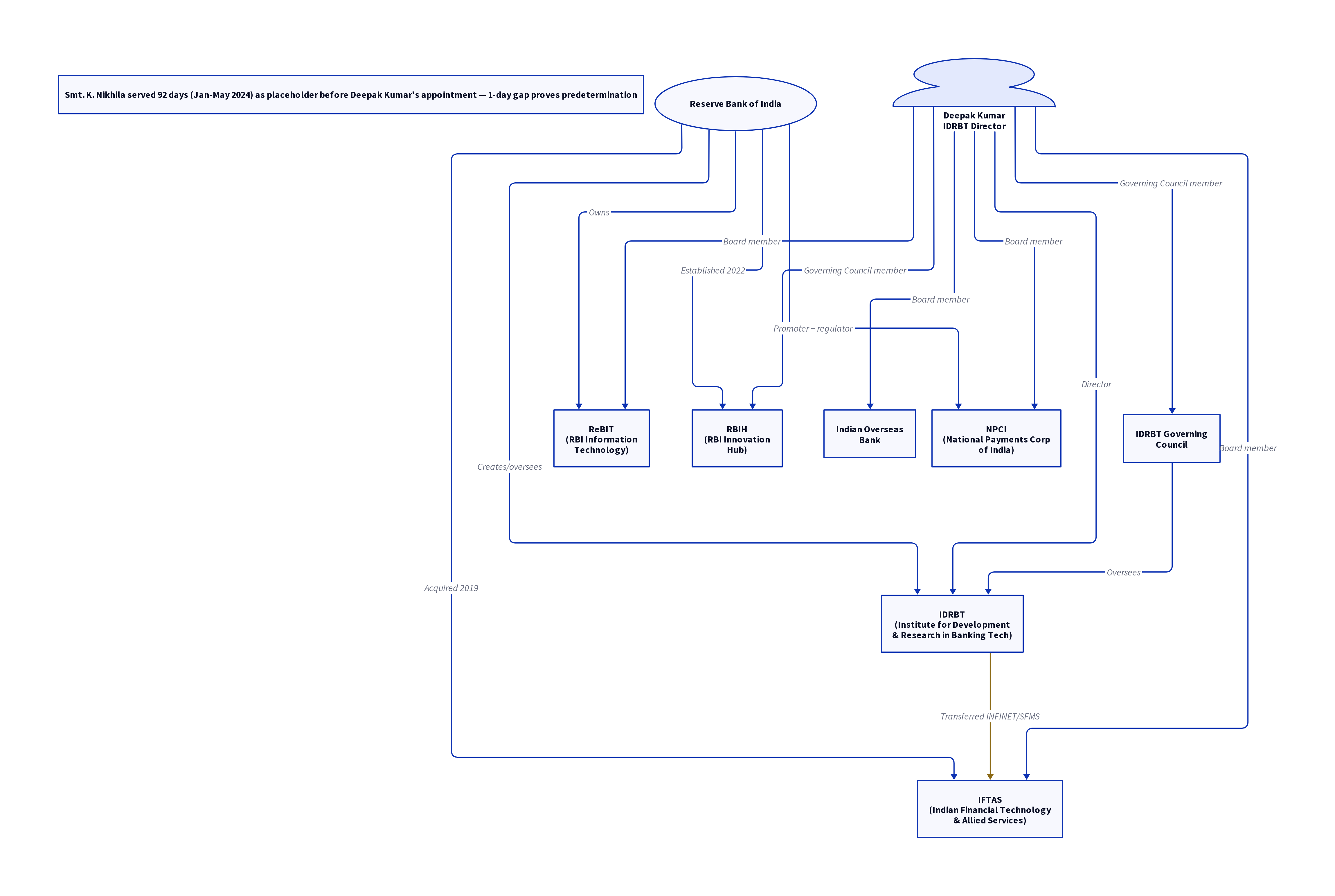
Figure 2.1 — Deepak Kumar's network of concurrent directorships across 7 RBI-controlled entities. Open full size →
│ RBI (Central) │
│ Deepak Kumar (ex-ED,│
│ IT Department) │
└──────────┬───────────┘
│
┌────────────────────┼──────────────────────┐
│ │ │
▼ ▼ ▼
┌────────────────┐ ┌──────────────────┐ ┌──────────────────┐
│ NPCI Board │ │ IFTAS Board │ │ ReBIT Board │
│ (Deepak K) │ │ (Deepak K) │ │ (Deepak K) │
└────────────────┘ └──────────────────┘ └──────────────────┘
▲ ▲ ▲
│ │ │
└────────────────────┼──────────────────────┘
│
┌──────────┴──────────┐
│ Deepak Kumar │
│ (Director, IDRBT) │
└──────────┬──────────┘
│
┌────────────────────┼──────────────────────┐
│ │ │
▼ ▼ ▼
┌────────────────┐ ┌──────────────────┐ ┌──────────────────┐
│ IDRBT Governing│ │ RBIH Governing │ │ Indian Overseas │
│ Council (he's │ │ Council (member) │ │ Bank (board) │
│ a member) │ │ │ │ │
└────────────────┘ └──────────────────┘ └──────────────────┘
```
Deepak Kumar simultaneously:
- Oversees IDRBT (as Director)
- Oversees himself (as Governing Council member)
- Sits on IFTAS (which owns the infrastructure IDRBT built)
- Sits on ReBIT (which should audit IDRBT's cybersecurity)
- Sits on NPCI (which relies on IDRBT's domain infrastructure)
- Sits on RBIH (which competes with IDRBT's innovation mandate)
- Sits on IOB (a regulated bank that must comply with IDRBT-operated domain requirements) [3][8]
2.4 The Rangarajan Committee Paradox
The 2009 External Expert Review Committee (EERC) chaired by Dr. C. Rangarajan recommended IDRBT shed operational services and focus on R&D. This led to creation of IFTAS and transfer of INFINET, SFMS, and other IDRBT-built infrastructure. [7]
The EERC report's recommendation directly led to the creation of IFTAS and the transfer of IDRBT-built assets — INFINET, SFMS, RTGS, NEFT, and IBCC.
Governance implication: The person who chairs the body overseeing IDRBT today helped design the policy that hollowed it out 15 years ago. There is no mechanism for a fresh perspective to question whether the 2009 assumptions remain valid — because no one at the table has any incentive to question their own legacy.
2.5 The IFTAS Clawback: How RBI Treats Its Own Entities
IFTAS is the clearest precedent for how RBI manages its subsidiary network:
| Year | Event | What Actually Happened |
|---|---|---|
| 1996-2009 | IDRBT builds INFINET, SFMS, Banking Community Cloud, other national infrastructure | RBI funds its own society to build critical banking tech |
| 2009 | EERC (Rangarajan) recommends IDRBT shed operational services | Rationale: focus on R&D. But the real effect: transfer assets out of IDRBT [^7] |
| 2015 | IFTAS established as Section 8 company owned collectively by banks | Takes over IDRBT-built infrastructure. No market pricing: assets transferred without valuation |
| 2015-2016 | 431+ IDRBT employees transferred to IFTAS (per IDRBT records) | Institutional knowledge and operational capability transferred |
| 2019 | RBI acquires IFTAS entirely from the bank consortium | Now RBI directly controls the assets IDRBT originally built. Asset consolidation complete [Annexure C] |
The governance template: Build in IDRBT → spin off to IFTAS (with banks' money) → acquire IFTAS back (with RBI's balance sheet). Each step bypassed the accountability that would have applied had assets been transferred through market mechanisms. No shareholder vote, no CAG valuation, no parliamentary disclosure.